
Create a New Cost Code
Cost codes identify the type of work completed and allocate costs to the appropriate project budget. When processing an electronic docket, a supervisor selects a cost code to allocate the cost to the correct budget.
Note: This guide explains how to manually create a single cost code. To create or update multiple cost codes at once, see the Bulk Import Cost Codes Using an Excel Spreadsheet help article.
In this article
Permissions
To access the Dockets Setup screen (Menu > Dockets Setup) and add and manage cost code, you must have one of the following permissions:
- Dockets Super User
- Admin Manager
Create a New Cost Code
To create a cost code using the Virtual Superintendent user interface:
- Sign in to Virtual Superintendent.
- Click Menu > Dockets Setup. The Dockets Setup page opens.
-
Click the Cost Codes tab.
 Click or tap to expand image
 -
Click Add Cost Code.
 Click or tap to expand image
 -
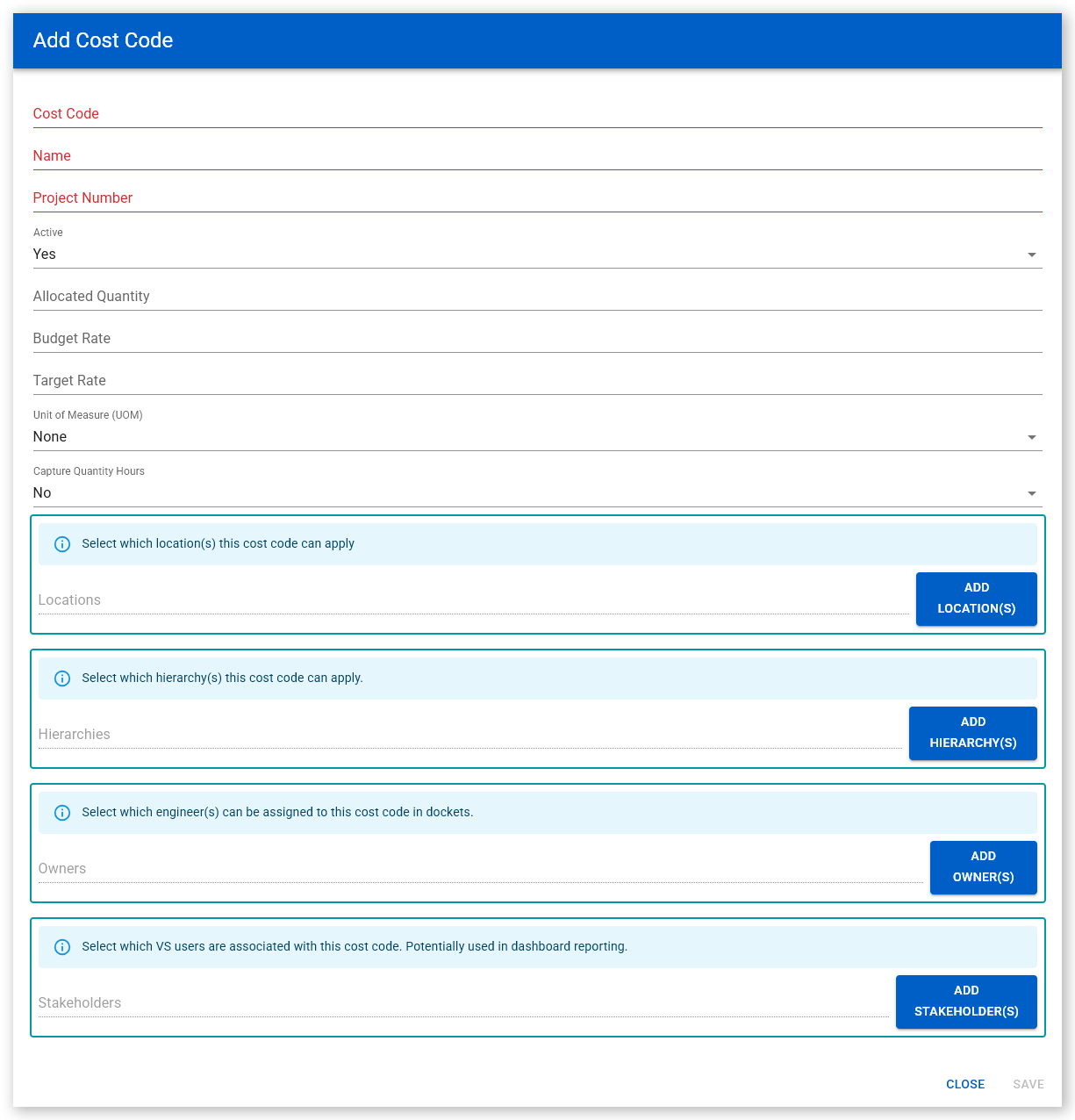
Enter the details of the new cost code (these fields are described below). Required fields are highlighted in red.
 Click or tap to expand image
 - If required, assign locations, owners, or stakeholders to the cost code. These are optional.
- Click Save. The new cost code is created and saved. If the cost code is set to active, it can be used by supervisors immediately.
Cost code fields
| Field | Description |
| Cost Code | Unique identifier for the cost code. Required. |
| Name | Name of the cost code. Required. |
| Project Number | The project number to which costs for this cost code are allocated. Required. |
| Active | Select Yes to make the cost code available in selection lists in SafeSite and Virtual Superintendent. Supervisors can then assign the cost code to a docket. Select No to prevent supervisors from selecting the cost code. |
| Allocated Quantity | Total quantity in the UOM assigned to the cost code (for example, 500 tons or 400 hours) |
| Budget Rate | The planned bid rate for the work (for example, 50 dollars per ton) |
| Target Rate | Target rate for completion (for example, 45 dollars per ton) |
| Unit of Measure (UOM) | Select the unit used to measure the cost code (for example, day, hour, dollar, cubic meter, ton). |
Assign locations
You can assign one or more docket locations to a cost code. When you assign locations, the cost code applies only to the selected locations.
To assign locations, select the checkbox for each location you want to associate with the cost code. To remove a location, clear its checkbox.
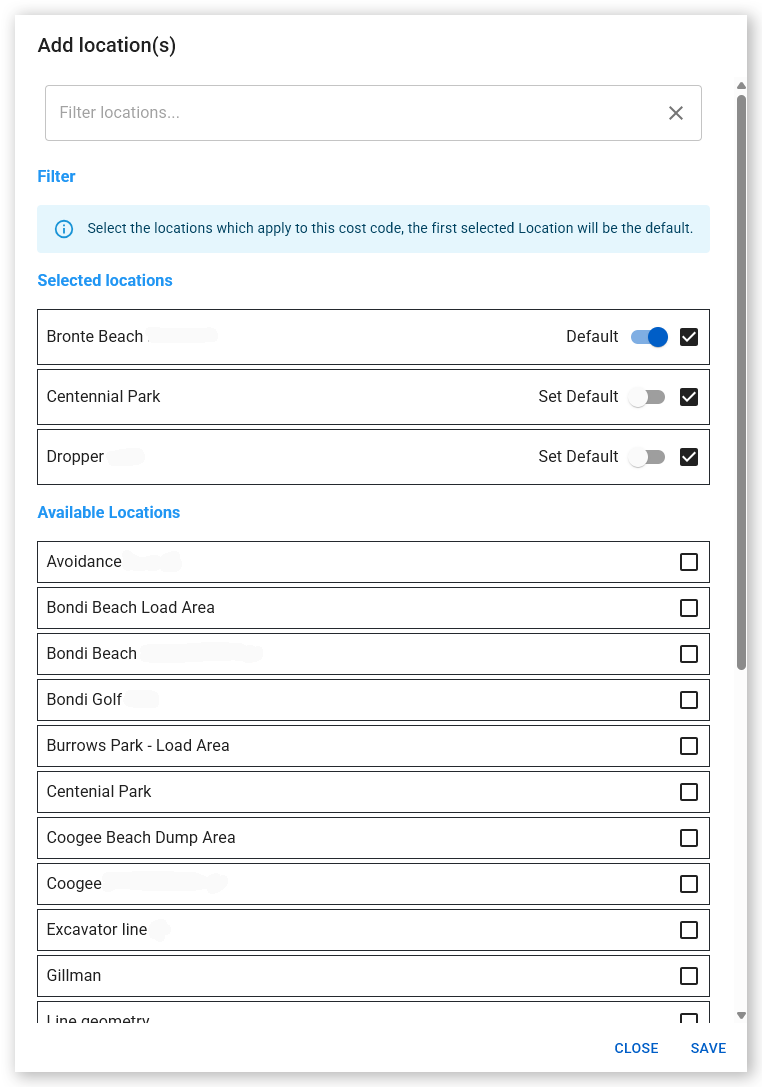
The first selected location is automatically set as the default. You can change the default location if required using the Set Default toggles.
Assign owners
You can assign one or more engineers as owners of a cost code. Cost codes with assigned owners are also referred to as locked cost codes.
Assigning owners helps supervisors select the correct engineer when processing a docket by limiting the engineers available for the selected cost code.
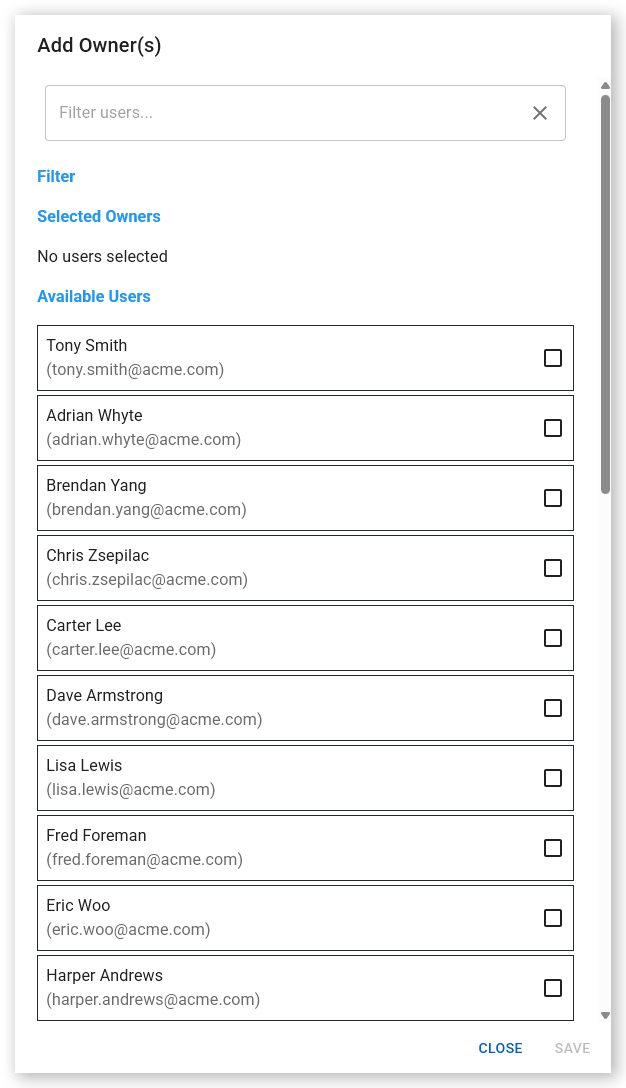
If you assign multiple owners, one engineer must be the default owner. The first engineer you select is automatically set as the default, but you can change the default owner.
When a supervisor selects a cost code with assigned owners, the default engineer is automatically assigned to the docket. If the supervisor selects an engineer first, the list of available cost codes is limited to those associated with that engineer.
For more information, see the Assign a Cost Code with Owners to a Docket help article.
Note: If a supervisor can't select the correct engineer because that engineer isn't assigned as an owner of the cost code, a user with the Dockets Super User permission must resolve the issue. Users with this permission can assign any engineer to a docket regardless of cost code ownership.
Assign stakeholders
You can assign one or more head contractor Virtual Superintendent users as stakeholders for a cost code. Assigning stakeholders helps track expenditure by person.
Stakeholder data can also be used for reporting and dashboards. For assistance with project-specific dashboards that use stakeholder or cost code ownership data, contact support@virtualsuper.com.